
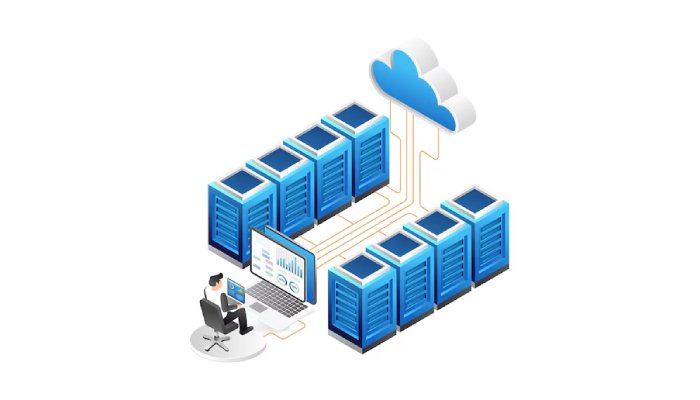
Serverless architectures have transformed the way applications are developed, deployed, and managed. Instead of provisioning and maintaining servers, businesses can rely on cloud providers to handle the infrastructure, allowing developers to focus solely on code and functionality. Serverless computing enhances scalability, optimizes costs, and reduces operational overhead. However, despite eliminating traditional server management, applications still require efficient request routing and distribution to maintain performance, reliability, and security. This is where a network load balancer plays a crucial role. It ensures that incoming requests are intelligently routed to available resources, preventing overload and maintaining responsiveness in a serverless environment.
How A Network Load Balancer Works In Serverless Environments?
Unlike traditional load balancers that operate at the application or transport layers, a network load balancer functions at the transport layer (Layer 4 of the OSI model). It uses TCP and UDP protocols to route traffic, enabling high-speed processing with minimal latency. In serverless architectures, the network load balancer:
- Receives Incoming Requests: When users access a serverless application, the network load balancer receives the request and evaluates its destination.
- Determines the Optimal Routing Path: Using algorithms such as round-robin, least connections, or IP hash, it selects the best backend resource to handle the request.
- Distributes Traffic Efficiently: It forwards the request to an available serverless function, microservice, or API gateway, ensuring balanced workload distribution.
- Monitors Service Health: The network load balancer continuously checks the health of backend resources. If an instance becomes unresponsive, it automatically redirects traffic to a healthy endpoint.
This process ensures that serverless applications remain responsive, scalable, and reliable even during high-demand periods.
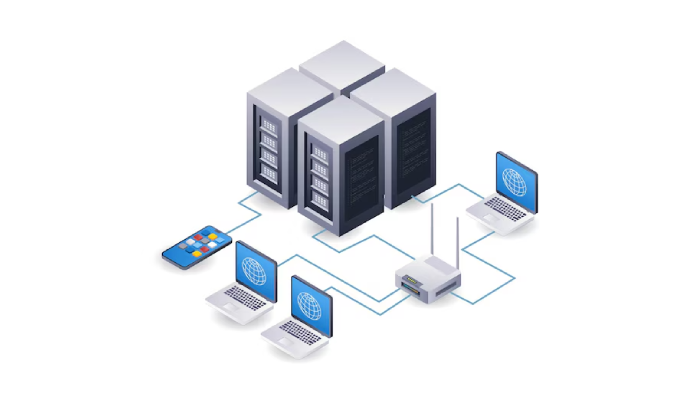
Benefits Of Using A Network Load Balancer In Serverless Architectures
A network load balancer provides several key advantages that make it indispensable in modern serverless deployments. These benefits include:
Improved Scalability and Elasticity
Serverless applications automatically scale based on demand. A network load balancer complements this scalability by distributing requests efficiently across multiple instances, ensuring that no single function is overwhelmed. This elasticity prevents performance degradation and service disruptions.
Reduced Latency and Faster Response Times
By routing requests to the nearest or most responsive backend service, a network load balancer minimizes latency. This is particularly crucial for applications that serve global users, where proximity-based routing enhances speed and user experience.
Enhanced Security and Traffic Control
A network load balancer acts as the first line of defense against distributed denial-of-service (DDoS) attacks and other malicious activities. It helps filter and manage incoming traffic, reducing the risk of serverless function exhaustion or unauthorized access.
Cost Optimization
In serverless architectures, organizations pay only for the compute resources they consume. A network load balancer helps optimize these costs by evenly distributing workloads, preventing unnecessary resource allocation and idle instances.
Key Use Cases Of A Network Load Balancer In Serverless Architectures
A network load balancer is essential in various serverless applications, including:
API Gateways and Microservices
Serverless applications often rely on API gateways to manage client requests. A network load balancer enhances API performance by distributing traffic across multiple serverless functions, ensuring seamless request handling.
Event-Driven Applications
Many serverless architectures are event-driven, responding to triggers such as database updates, message queues, or IoT device interactions. A network load balancer helps manage event-driven workloads by directing traffic efficiently to the appropriate function.
Real-Time Applications
For applications requiring real-time processing, such as video streaming, financial transactions, or gaming services, a network load balancer ensures that requests are handled with minimal latency and optimal performance.
Serverless Databases and Storage Solutions
Serverless applications often interact with cloud-based databases and storage services. A network load balancer helps optimize database queries and file requests by distributing them across multiple database instances or storage endpoints.
Challenges And Considerations When Implementing A Network Load Balancer
While a network load balancer provides numerous benefits, there are challenges to consider:
- Cold Start Delays: In some serverless environments, functions may experience cold starts when scaled up. A network load balancer can mitigate this by pre-warming instances, but additional configuration may be required.
- Routing Complexity: Depending on the architecture, determining the best routing strategy can be complex. Choosing the right load-balancing algorithm is crucial for optimal performance.
- Security Considerations: While a network load balancer enhances security, additional measures such as API authentication, encryption, and monitoring are necessary to protect serverless workloads.
Best Practices For Using A Network Load Balancer In Serverless Architectures
To maximize the benefits of a network load balancer in serverless computing, organizations should follow these best practices:
- Choose the Right Load Balancing Algorithm: Depending on the application’s traffic patterns, select the most suitable strategy (e.g., round-robin, least connections, or weighted routing).
- Monitor Traffic and Performance Metrics: Use monitoring tools to track request distribution, latency, and backend service health.
- Implement Auto-Scaling and Pre-Warming Strategies: Ensure that serverless functions are ready to handle incoming traffic surges by configuring auto-scaling policies and pre-warming techniques.
- Enhance Security Measures: Protect serverless functions from unauthorized access by integrating security policies such as access control, encryption, and API gateways.
- Optimize for Cost Efficiency: Regularly analyze traffic patterns and adjust load balancing configurations to minimize costs while maintaining high performance.
Conclusion
Serverless architectures offer unprecedented scalability, cost efficiency, and operational flexibility. However, ensuring high availability, performance, and security requires an effective traffic distribution mechanism. A network load balancer plays a crucial role in optimizing request handling, reducing latency, and maintaining service reliability in serverless applications. By implementing best practices and leveraging the right load-balancing strategies, organizations can build robust, scalable, and secure serverless solutions that meet modern application demands.

Hello, I’m Frederic Ho, a seasoned writer based in the bustling city of Seattle, United States. With a deep well of knowledge in business and technology, I craft insightful content that navigates the intricacies of these dynamic realms. Join me as I explore the intersection of innovation and commerce, providing a fresh perspective on the ever-evolving landscape of business and technology.
